Why the Ball Goes Back After a Rugby Knock-On
Learn why a rugby knock-on sends play back to a scrum, where that scrum is set, and how deliberate forward play or advantage changes the restart.
The common mistake after a rugby knock-on is to think the referee is simply rewinding play because the ball travelled forwards. Usually, the whistle means an accidental handling error has stopped play, and the other team gets a scrum. “Going back” describes the restart after the loose ball, not the ball’s direction of travel.
What does “going back” mean after a knock-on?
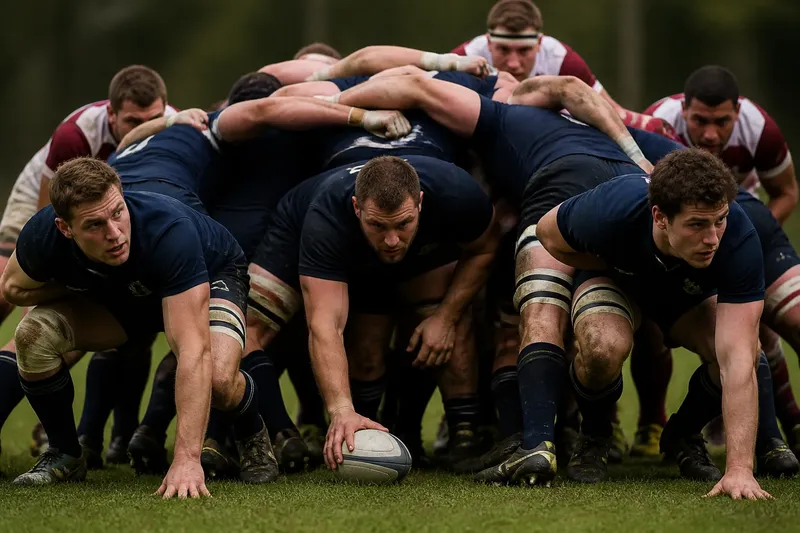
When the referee stops play for an accidental knock-on, the opposing team is usually awarded a scrum. The scrum is formed at a place set by the laws; play does not restart wherever the ball happens to roll or where a player eventually gathers it.
A knock-on occurs when a player loses possession and the ball travels forwards, or propels it forwards with a hand or arm and it touches the ground or another player before that player can catch it. “Forwards” means towards the opponents’ goal line, not towards the way the player is facing.
The referee awards the scrum to the team that did not knock on. That side gets the put-in, but the scrum remains a contest for possession. The restart does not hand the ball to them outright.
Where is the scrum after a knock-on in a ruck?
The phrase “back to the scrum” can hide an important detail: the restart location depends on where the knock-on happened. If a player knocks the ball on in open play, the scrum is generally set at the place of the infringement, subject to the laws’ specific location rules.
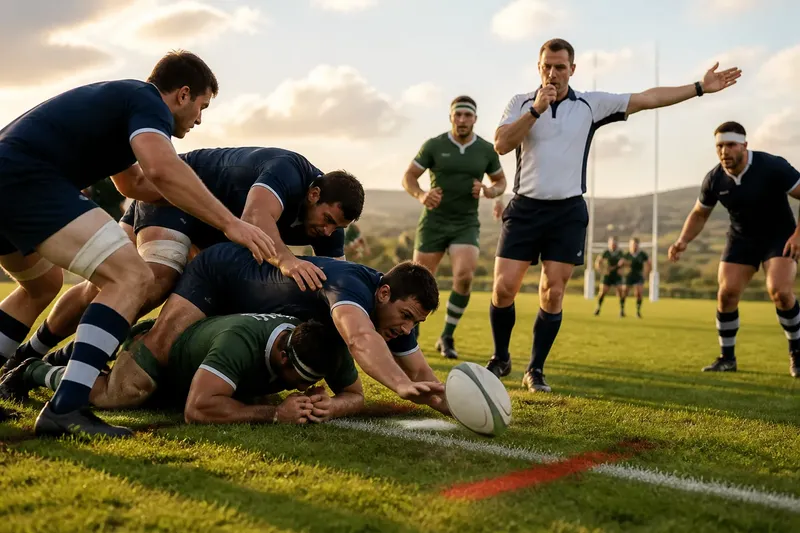
For a knock-on in a ruck, the scrum is set at the place where the ruck was formed. That is the relevant location for this restart, rather than the spot where the ball later comes to rest. If the ruck formed over the mark of a tackle or other play, the scrum location follows the ruck’s formation point under the applicable law.
Say an invented, hypothetical ruck forms beside a painted field mark, and a player accidentally knocks the ball forwards while reaching into it. The referee stops play and awards the opposing team a scrum at the point where that ruck formed. The ball rolling further downfield does not move the scrum to its resting place.
When does a knock-on bring a penalty instead?
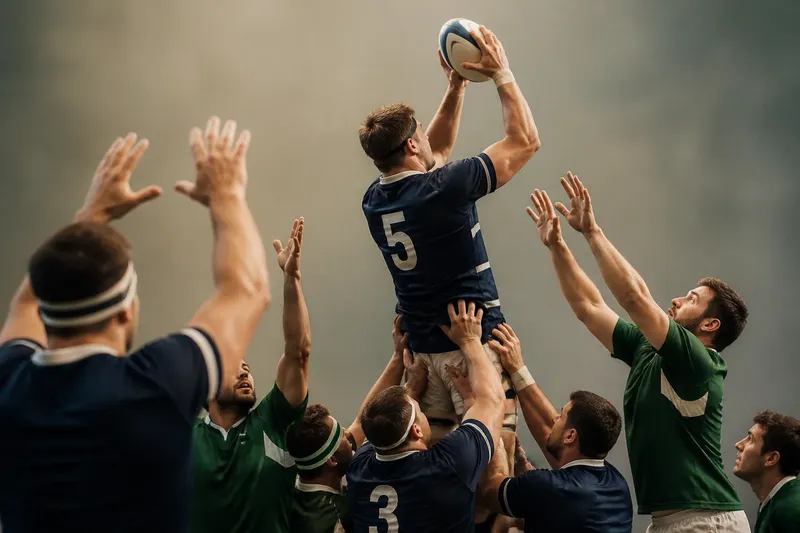
An accidental knock-on usually brings a scrum. A player who deliberately knocks or throws the ball forwards can instead concede a penalty. The referee judges the action in context: a failed attempt to catch or intercept is not automatically deliberate, while a clear slap to disrupt a pass may be.
If deliberate forward play prevents an opponent from receiving a pass, the referee may also consider whether a penalty try is appropriate. That further sanction is not automatic. It depends on whether the illegal action stopped a probable try.
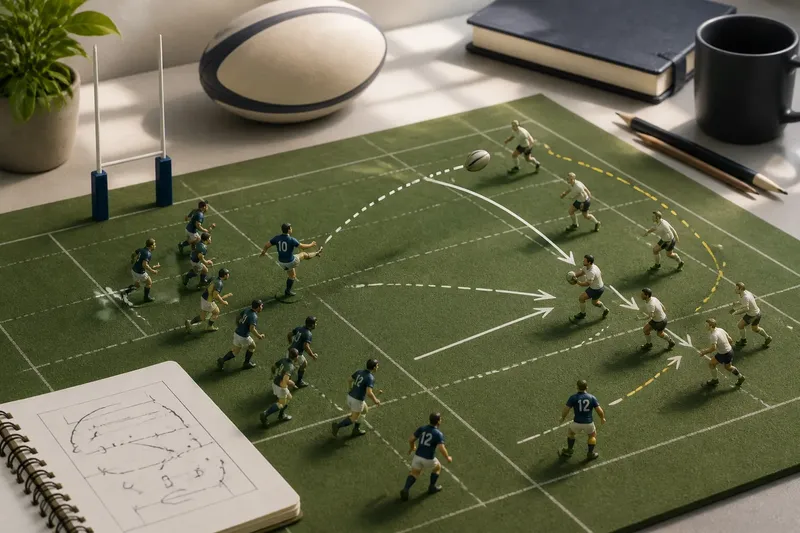
A forward pass is a separate infringement from a knock-on. The referee considers what the player did with the ball, not merely whether it ended up closer to the opponents’ goal line.
What changes after a tackle or charge-down?
A forward bounce is not always a knock-on. If a ball is dislodged in a tackle and goes forwards off an opponent, the referee considers who caused the movement and whether a player knocked or threw it forwards. The ball’s final direction alone does not settle the call.
A charge-down is another distinct case. A ball rebounding forwards off a player’s body after that player charges down a kick is not, by itself, a knock-on by the player who made the charge-down. If the player then tries to gather it and knocks it forwards with a hand or arm, the referee assesses that handling action separately. If it is an accidental knock-on, the usual scrum is awarded at the place of that subsequent infringement, subject to the location rules; it is not automatically set at the earlier charge-down point.
Watch the sequence: a block off the body, a loose bounce, and a later attempt to gather are separate actions. That distinction helps explain why one forward rebound can be legal while a later handling error brings a whistle.
How does advantage affect the restart?
The referee may allow play to continue after a knock-on if the non-offending team has a chance to gain an advantage. That benefit might be territorial or tactical, such as securing the loose ball and launching an attack.
If a useful advantage does not develop, the referee can stop play and return to the scrum restart for the original infringement. If the team gains enough practical benefit, play continues. There is no need to count seconds: look for whether the opponents have a genuine opportunity to play on.
- If the referee signals advantage and the non-offending side collects the ball in space, play may continue; if the recovery is immediately smothered, expect the referee to consider bringing play back.
- If the ball spills forwards but the opponents secure it and make a useful attack, advantage may be sufficient; if they cannot turn possession into a practical opportunity, the referee may stop play for the scrum.
Which knock-on calls do viewers often ask about?
Does every dropped ball count as a knock-on?
No. The ball must travel forwards in the relevant way; a drop that goes sideways or backwards is not automatically a knock-on. A rebound off an opponent or a charge-down also needs to be distinguished from a player’s own handling.
Why does the scrum go to the other team?
The player’s team committed the accidental handling infringement, so the opponents receive the put-in. They get a chance to contest possession, not an automatic recovery of the ball.
Is a deliberate knock-on always a penalty try?
No. Deliberate forward play can bring a penalty, but a penalty try is considered only if the referee judges that the illegal action prevented a probable try. The attacking opportunity and circumstances matter.
Does a ball that rebounds forwards after a charge-down count?
Not on its own: a ball rebounding off the body during a charge-down is not automatically a knock-on. A later attempt to gather the ball is judged as a separate action.
What should you watch for when the ball spills forwards?
Follow the last clear action rather than the ball’s final bounce. Was there a failed catch, a deliberate slap, a charge-down, or a tackle that dislodged the ball? Then watch for the referee’s signal and the scrum location. A scrum generally indicates an accidental knock-on or another infringement with a scrum restart; a penalty points to a different judgement, such as deliberate forward play.
For the rugby knock-on restart, the useful distinction is between where the offence happened and where play resumes. In a ruck, the scrum is set where that ruck formed; after a later handling error following a charge-down, the referee assesses that later action and its location. That is why the ball can appear to “go back” even though the restart follows a precise law condition.