The Rugby Lineout’s Changing Shape: From Throw-In to Set Play
The rugby lineout changed from a simple restart into a planned contest. Learn to read its movement, player spacing and next action as play unfolds.
The most common mistake when watching the rugby lineout is to treat it as a pause for a throw, then look away until the ball emerges. That costs you the clues in the players’ spacing, movement and support. The lineout’s rules and tactics have changed over time, but the useful viewing habit is simple: follow the shape before the throw and the first action after the catch.
What changed in the lineout over time?
The lineout has not always looked like the organised set piece seen in modern rugby. Its basic purpose is to restart play after the ball goes into touch, with players from both teams forming lines and the throwing team sending the ball between them. The exact laws governing who may compete and how the contest works have changed across different periods, so broad claims about a single moment when the lineout “became tactical” can be misleading.
What you can see clearly in today’s game is a set piece built around more than the throw. Players coordinate the lift, the jump, the catch and the next phase. A team may keep a compact group, move players before the throw or leave some players out of the line. These are modern tactical choices, not proof of one simple historical turning point.
The practical shift for a viewer is from watching only the ball to reading the whole sequence. The throw is the centre of attention, but the spacing beforehand can hint at the target, while the players waiting outside the line can signal where possession may go next.
How do modern lineout shapes create options?
No shape tells the whole story on its own. A compact line, a moving group and a shortened line each trade contest strength against options elsewhere on the pitch.
What can a compact lineout do?
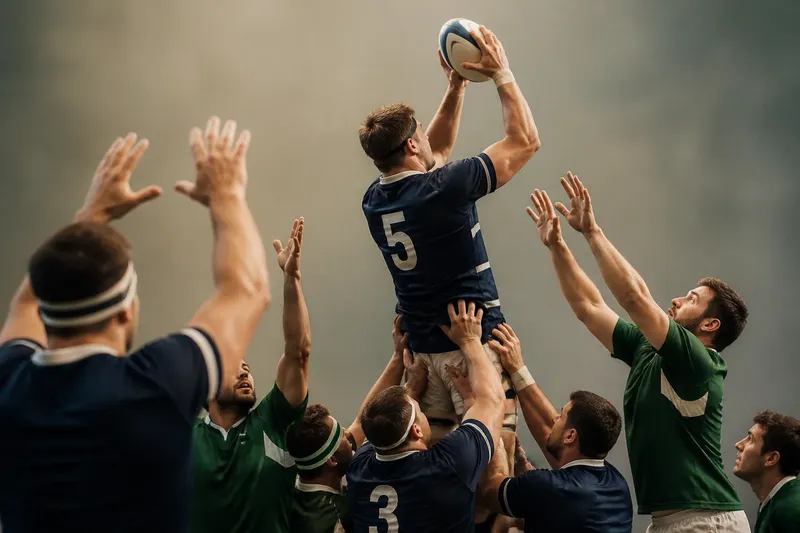
Several players gather close together, giving the throwing team a group around the likely catcher. The arrangement may help the team secure the ball and prepare a carry, pass or maul. Look for the jumper rising and then check whether teammates bind around the catcher or spread out to receive the ball.
Why move before the throw?
Players may switch places, shuffle or feint before the ball is thrown. The movement can make it harder for defenders to identify the target, but it also demands coordination. Follow the jumper who actually rises, rather than assuming the first player to move is the target.
What does a shortened line suggest?
A team that puts fewer players in the line has more players available elsewhere. Those players may wait behind the line or spread out for a pass, but the smaller contest can make winning the throw harder. Check where the spare players stand and what they do after the catch.
What should you watch before and after the throw?
Use each cue to make a provisional reading, then revise it when the ball is played. The shape offers clues, not certainty.
- Count the players in the line. If one side uses fewer, check where its spare players wait; if they are positioned to receive a pass, expect an option away from the contest, otherwise watch for them to join support.
- Watch for early movement. If players switch or feint, follow the jumper who rises; if the line stays still, look for the thrower’s target and the support around it.
- Find the likely jumper. If teammates gather close around that player, watch for a secured catch or maul; if they spread out, look for a pass once the ball is won.
- Track the ball after the catch. If it goes to the scrum-half, follow the backs’ attack; if it is carried into contact, watch how the team forms its next phase.
- Notice the defenders’ choice. If they jump to contest, check whether the catch is disrupted; if they stay grounded, watch how they organise to defend the next action.
- Look behind the line. If a player waits in open space, see whether the catcher passes there; if nobody is positioned behind, follow the ball towards the scrum-half or the forwards.
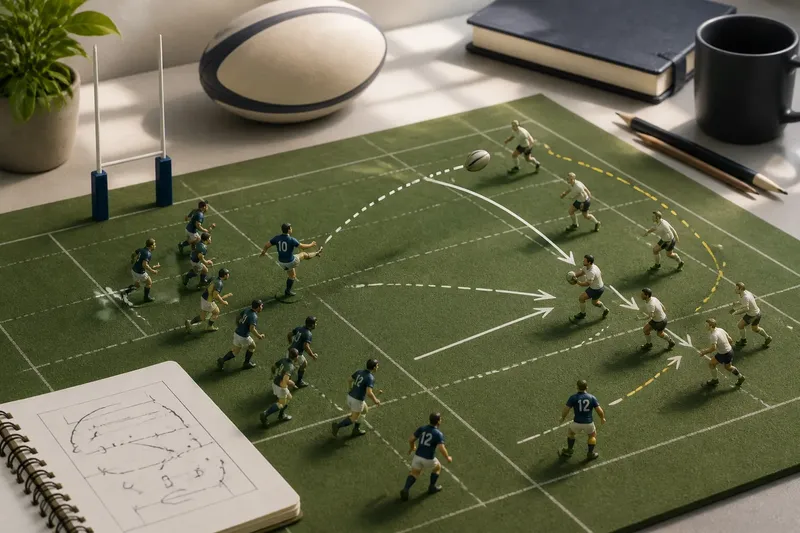
Say a team has six players in a compact line and one teammate waiting behind it; those are invented numbers for this example, not a claim about a typical formation. The thrower sends the ball to a supported jumper, who catches it cleanly. The catcher then passes to the waiting player, who has room to move the ball away from the line. The reading is that the team kept a receiving option outside the contest; if the catch had been lost, that option would not have produced possession, and the team would have had to defend the next play instead.
Which lineout questions help you read the play?
Can the throwing team target any player in the line?
The throwing side chooses where to send the ball, within the laws in force for that match. Watch the throw and the player who rises rather than relying only on the initial arrangement.
Why do teammates lift a jumper?
Support helps a jumper reach the ball and can help the group control the catch. The supporting players also need to be ready for what follows, such as securing the ball or setting up a pass.
How is a catch different from a maul?
A catch is when a player secures the thrown ball. A maul may form when the ball carrier and players from both teams bind together while on their feet; watch how the players connect after the catch.
Does every lineout aim to win the ball cleanly?
No. A team may use its formation to create space or prepare a particular next action, even while trying to contest possession. The first pass, carry or maul after the throw gives you a clearer clue about its immediate plan.
How can you read a rugby lineout in real time?
For the rugby lineout, read the sequence rather than assigning a fixed meaning to one formation: count the players, follow any movement, identify the jumper, then track the ball and the players outside the line. That makes it easier to distinguish a direct carry from a pass or a developing maul without assuming the plan before it happens.
One useful detail is the player who does not jump. Their position may reveal where the team wants an outlet, but only the catch and the next action show whether that option is available. Keep watching after the ball is won; the lineout’s shape matters most when it begins to dissolve into open play.