Flanker or Number Eight: Two Jobs at the Back of the Scrum
Flanker or number eight: follow how each role shapes the scrum exit, protects the ball and chooses a route into loose play.
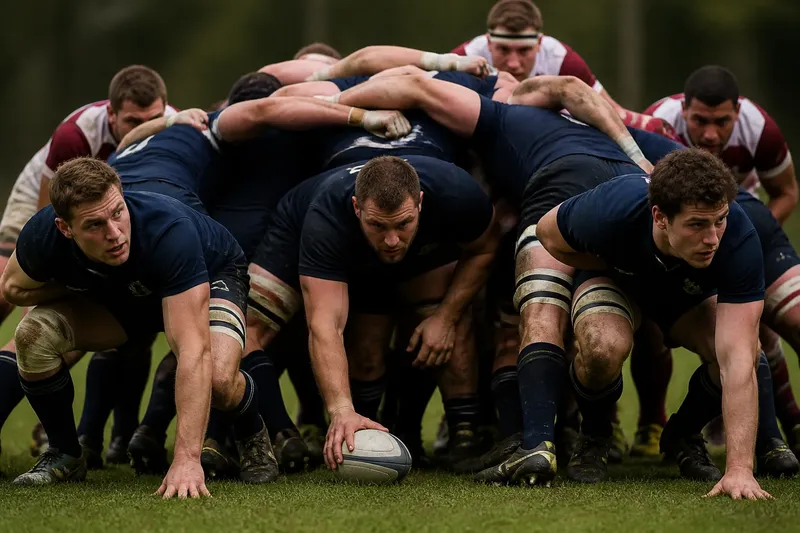
The common mistake when reading a scrum is to treat the three players at its back as one interchangeable unit. That blurs the difference between a flanker who connects the scrum to the contest around it and a number eight who controls the ball at the base. If you are asking “flanker or number eight?” the answer becomes clearer when you watch who tracks the opposition and who manages the ball.
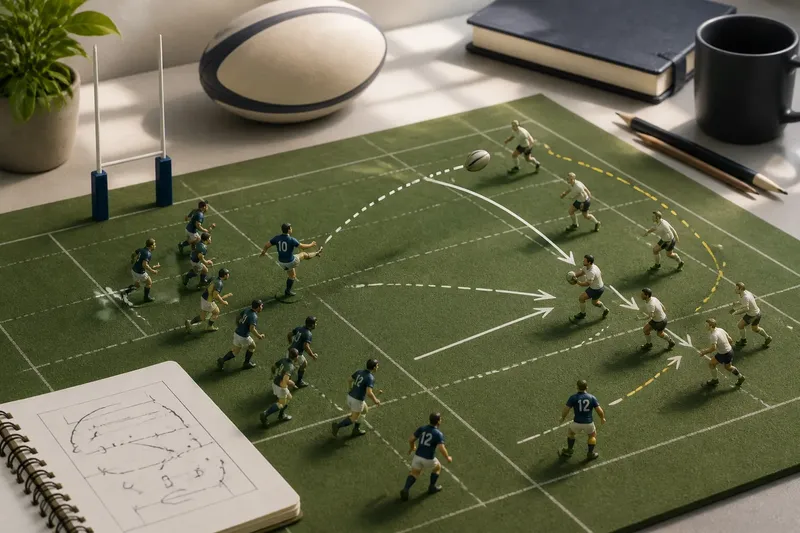
Here is one invented, hypothetical passage to follow. Imagine a team defending near halfway. Its scrum is awarded after a forward error, and the opposition pack sets to push towards the defending goal line. The defending side has a blindside flanker, an openside flanker and a number eight. Their jobs overlap, but the choices they make are not the same.
Who is watching whom before the ball comes out?
The flankers bind on the sides of their own scrum, beside the locks. One is on the side with less space between the scrum and the touchline: the blindside. The other, the openside, is on the side with more room. Those names describe the scrum’s layout, not a permanent left or right position. The scrum can form in a different place, and the sides can change with it.
The number eight binds at the rear, joining the two locks and the flankers. The position gives the player a direct relationship with the ball as it reaches the back of the scrum. The number eight may keep it under control with a foot, then decide whether to pick it up or let the scrum-half take it.
In our imagined passage, the defending openside checks the opposing scrum-half and the nearest receiver. The blindside scans the short side, where a runner might try to slip around the scrum. The number eight stays focused on the ball and the shape of the scrum. These are starting priorities, not fixed scripts: each team’s defensive plan and the picture on the field can alter who takes which threat.
What does each player do as the scrum moves?
The opposition scrum pushes. The defending pack has to stay connected and stable, while its back-row players read what that movement means. The flankers help hold the scrum’s sides together and remain ready to detach once the ball is available. Their first question is often about the threat outside the scrum: where is the first receiver, and how quickly can that player act?
The number eight has a different immediate task. The ball is rolling back between the feet of the forwards. The player at the base can keep it sheltered from pressure and judge when it is safe to release. If the scrum is moving, that decision matters: picking the ball up too early may expose it, while leaving it too long may give the opposing pack time to disrupt the exit.
In the invented scene, the scrum holds together and the ball reaches the number eight’s feet. The number eight keeps it in place for a moment, then allows the scrum-half to collect it. The openside is already poised to move towards the first receiver; the blindside stays alert to the short-side runner. The number eight has not simply “joined the attack”. The player has helped choose the timing and shape of the scrum’s exit.
When does the number eight pick up?
Picking up from the base can be useful when the number eight sees room to carry, when the scrum has created forward momentum, or when the defence has left a gap close to the scrum. It can also draw defenders inward and create space for a pass. But carrying is only one option. A number eight may hold the ball for the scrum-half, especially if teammates are better placed to use the width or direct play elsewhere.
Say the imagined number eight sees the opposing flankers edging outward to cover the backs, while a narrow lane remains beside the scrum. The player picks up and carries into that lane, forcing a defender to step in. The scrum-half can then receive the ball with a little more room. That is a plausible choice in this invented situation, not a universal instruction: if the lane were crowded or the scrum unstable, protecting the ball and releasing it might be wiser.
Notice the distinction. The number eight is not simply the “big runner” at the back. The role includes reading the base, choosing whether to take the ball and making that choice fit the next phase. A carry is one visible result of that work; a controlled release can be just as important.
How do flankers affect the first phase after the scrum?
Once the ball leaves the scrum, the flankers’ attention shifts quickly. In defence, they may move towards the first receiver, close a passing lane, tackle a carrier or help cover a runner who breaks away from the main attack. In attack, they can support a ball-carrier, arrive at a breakdown or offer a short passing option. The exact assignment depends on the team’s plan and where the ball goes.
In our hypothetical passage, the opposing scrum-half passes to a back, who runs towards the openside. The openside flanker leaves the scrum to pressure that receiver. The blindside flanker follows the short-side threat long enough to ensure the ball has not gone there, then turns to support the next defensive action. The number eight, having released the ball, also moves into loose play, but from a different starting point: the base of the scrum.
That starting point affects what each player can see and reach first. A flanker begins on an edge of the pack, close to a channel the opposition may attack. The number eight begins behind the scrum, with the ball directly in front. Both may end up tackling, carrying or supporting at a later phase, but their first decisions grow out of different responsibilities.
What can you tell from their first moves?
- Watch the scrum’s shape. The flankers are attached at the sides; the number eight is bound at the rear. This helps you identify each role before the ball emerges.
- Track the number eight’s feet. If the player controls the ball at the base, look for a pause, a pick-up or a release to the scrum-half.
- Follow the openside flanker. This player often has a direct route towards the first receiver on the wider side, though the defensive system may assign another target.
- Check the blindside. A flanker on the narrow side can be responsible for a runner or a short pass that would otherwise be easy to miss.
- Notice what happens after the pass. Once the ball leaves the scrum, all three back-row players can join the next phase, but they arrive from different angles and may have different tasks.
These clues are more useful than guessing from a player’s size or shirt number alone. Teams can vary their patterns, and flankers may switch sides. For a particular match, the team sheet identifies the named positions; the way players bind and move shows what they are doing in that passage.
Which role is easier to spot during a scrum exit?
Does the number eight always pick up the ball?
No. The number eight can control the ball at the base and leave the pick-up to the scrum-half. Watch whether the player lifts the ball or simply keeps it available for the pass.
Are the openside and blindside flanker fixed positions?
They describe the flanker’s side of a particular scrum: the side with more space and the side with less. As the scrum location changes, those sides can change too.
Can a flanker carry the ball after a scrum?
Yes. Once the ball has been released, a flanker may carry, pass, tackle or support a teammate, depending on the developing play. The distinction is not that only the number eight handles the ball, but that the number eight has the direct job of managing it at the scrum’s base.
Why do all three players sometimes seem to do the same thing?
At the next phase, each may arrive at a tackle or breakdown, so the visible action can look alike. The difference lies in their starting points and the decisions that brought them there: flankers read the scrum’s edges and nearby threats, while the number eight manages the ball at its rear.
What should you remember when the next scrum forms?
Return to the invented passage near halfway. The number eight controlled the ball and chose a release; the flankers watched different edges of the scrum, then moved towards the threats on their respective sides. When the number eight carried in the hypothetical variation, the choice came from a gap in front, not from a rule that the player must run.
For a quick read of “flanker or number eight”, follow the ball first, then the players. Ask who is handling it at the base and who is already scanning the space outside. That small shift in attention makes the scrum exit easier to follow—and helps you see why the back row is a working unit rather than three copies of the same job.